





Experts guide
Scotch Whisky Styles
In recent years, whisky has been enjoying a rise in popularity, and with new distilleries opening each year, it shows no signs of slowing down. With such a diverse range of whiskies available from across the globe - it’s a great time to be enjoying some liquid gold. We know it can seem a little overwhelming when starting out on your whisky journey – so we have put together a short introduction on the styles of whisky available to help you get started.
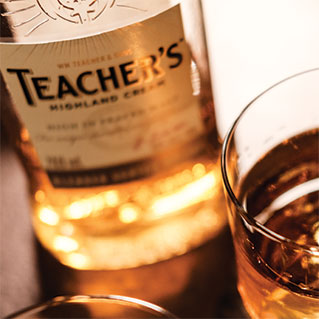
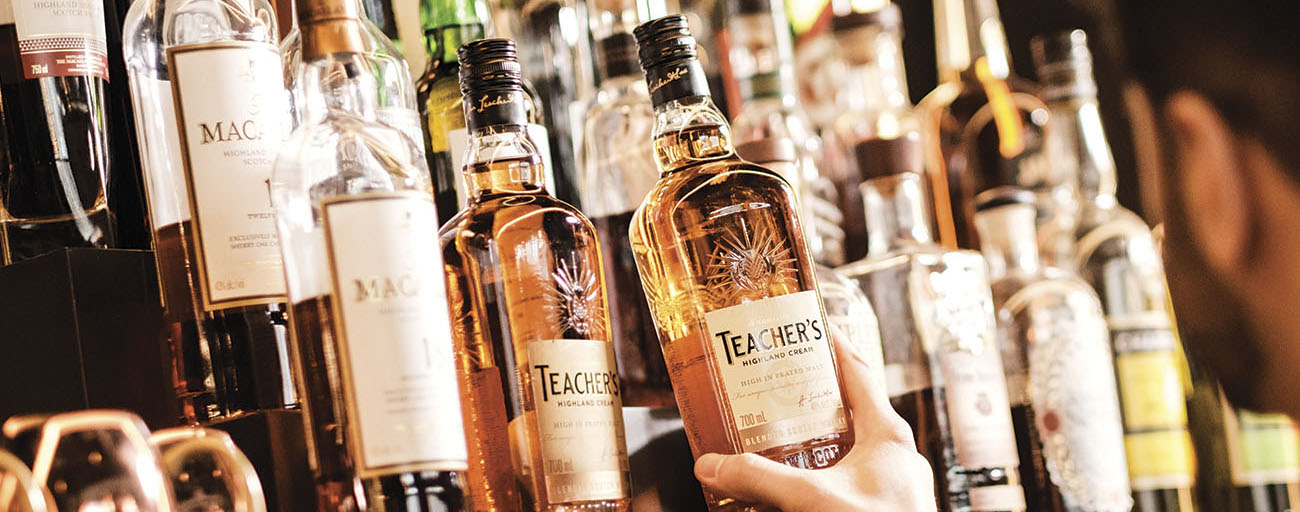
Here at Teacher’s we work closely with the Scottish Whisky Association (SWA) who help to protect the much loved spirit drink with its global reputation. As part of this, you will see the appropriate style is clearly visible on each of our bottles of whisky. Our classic award winning Teacher’s Highland Cream is a Blended Scotch whisky.

Blended Scotch whisky
Blended whisky is by far the most popular style of whisky enjoyed across the globe today. To achieve the status of a ‘Blended Scotch whisky’ the product must be a blend of one or more Single Malt Scotch whiskies with one or more Single Grain Scotch whiskies.
You will often hear the term ‘fingerprint’ which describes the single malt used within the blend – for Teacher’s Highland Cream, we use the fully smoked peat single malt whisky from The Ardmore, giving incredible depth and smoothness with a rich smokey undertone. Blends can have as many as 50 different malt and grain whiskies - all skilfully selected and blended together for a unique flavour profile.

Single Grain Scotch whisky
Similar to the Single Malt, this is whisky that has been distilled at a single distillery. It must also be distilled from water and malted barley however can be with or without whole grains of other malted or unmalted cereals.
Cereals are the critical raw material used in the production of Scotch whisky, it typically refers to grains such as barley or wheat. Historically, the vast majority of grain whisky produced has been for blends however, this is changing and you will start to see more Single Grain Scotch whiskies entering the market in the upcoming years.
Single Malt Scotch whisky
Single malt whisky is often ranked among the best whisky in the world. To achieve its status as Single Malt Scotch whisky it must be distilled at a single distillery. In addition it must be distilled from water and malted barley without the addition of any other cereals. Lastly, it must be distilled by batch distillation in pot stills. An age statement on a bottle will reflect the amount of time the youngest whisky in that bottle has spent maturing in a cask.
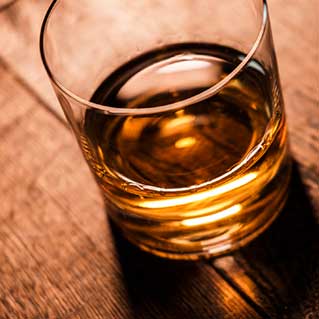
Blended Malt Scotch whisky
As the name suggests, this category dictates that the whisky can be a blend of Single Malt Scotch whiskies that have been distilled at more than one distillery.
Blended Grain Scotch Whisky
This style of whisky is a blend of Single Grain Scotch whiskies that have been distilled at more than one distillery.
Experts guide
Whisky regions
To protect the world's leading and much loved Scotch spirit, rules are in place to ensure the quality, authenticity and integrity of Scotch whisky is retained. Regulations set by the SWA state that the whisky must retain the colour, aroma and taste derived from the raw materials used in production and maturation. It must also be aged in oak barrels for a minimum of 3 years and the minimum bottling strength is 40% ABV (Alcohol By Volume).
The 5 whisky-producing regions in Scotland are: the Highlands, Islay, Speyside, the Lowlands and Campbeltown. Regions are based on their geographic location and this tends to influence the flavour profile of the whisky being crafted. Teacher’s is a Highland whisky – the Highlands being by far the largest area giving a greater diversity of styles within the region. Of course it is not only the location that will determine the style of the whisky. The ingredients, size and shape of the stills and the experience of the craftsmen will all combined to create unique flavour profiles.
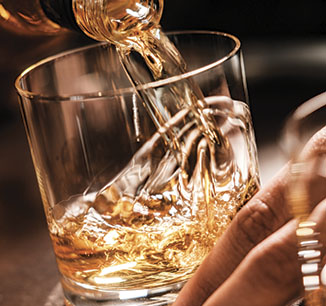
EXPERTS GUIDE
The origins of Whisky
The word whisky originates from the Gaelic ‘uisge beatha’ or ‘usquebaugh’ which simply means ‘water of life’. Who first invented whisky has long been disputed between the Scots and the Irish, although most agree that monks brought distillation along with Christianity in the 4th and 5th centuries. An entry in the 1494 records, known as the Exchequer Rolls, helps us understand the origin of whisky in Scotland. It reads ‘by order of the king, eight bolls of malt to Friar John Cor wherewith make aqua vitae’. John Cor was the distiller at Lindores Abbey in Fife. According to the SWA, ‘eight bolls’ would be enough to produce almost 1,500 bottles, an indication that whisky making was already established in Scotland by the 15th century.
Whisky was initially ‘taken’ for its believed medicinal qualities - records show it being prescribed for Smallpox, Palsy and Colic. The commercial demand for whisky came in the mid 18th century, possibly due to the rise of urbanised societies. Glasgow, the home of Teacher’s (known then as the Second City of the Empire), boasted a population of 762,000 in 1901 and it was around this time whisky became a drink for the masses.

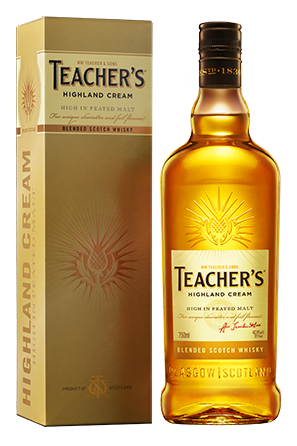
Colour
Rich amber with yellow gold highlights.
Nose
A deep and robust maltiness shows through at the very start that is accompanied by a gentle Highland peat smoke tang. This full flavour slowly fades to allow the sweeter fruitier flavours of apples, pears and heavy honey maturity to show through.
Palate & Body
There is a challenging and exciting taste that at the same time is round a warming. This superb flavour is full of rich malts and maturity that slowly fades to a silky rounded texture. This whisky is a delight, full of depth and substance.
Finish
Well balanced with a clean busy flavoured fullness that ends with a slow fading of flavours.

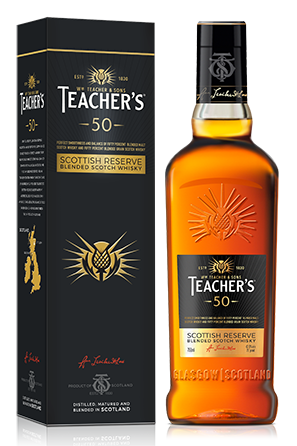
Colour
Rich and full on the nose, with sherry, malt and oranges plus a hint of peat.
Nose
Deep and robust maltiness with hints of pear and sherry maturity.
Palate & Body
Challenging, exciting, round and warming with a silky texture. Tastes of full rich malts and maturity, with a full depth and substance.
Finish
Long, spicy with suggestion of smoke.

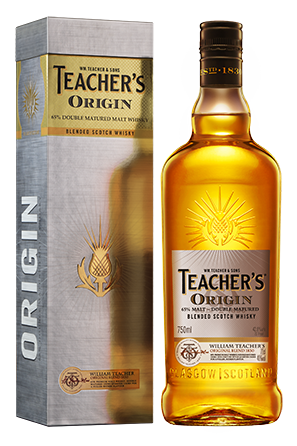
Colour
Deep gold with a dusky red tinge.
Nose
Together with an initial rich malty burst the sweet pear and the apple fragrance seem to mask the drier peat flavour which underlies the multitude of delicious aromas. With a touch of water the fragrant, flowery Speyside and Highland malts come to the fore together with a tang of orange and dried grape sweetness. Circling all these flavours holding them together is the full roundedness of Highland peat smoke.
Palate & Body
A vast alternating change of tastes varying from immense sweetness to dry slightly tart oakiness with all variations inbetween, surrounded by the unique liquorice root smokiness from the Ardmore peat. The body on this creation is mouth filling and incredibly rich.
Finish
Exceptionally long lasting.
[en] Page_Our_Whiskies - Section_Whiskies - Component_Whiskies (Teacher's Origin)
This premium blend is one of the highest stature, created in celebration of our founder Wm Teacher. William believed in using a high proportion of single malts in his blends and our Teacher’s Origin has the highest at 65%.
[en] Page_Our_Whiskies - Section_Whiskies - Component_Whiskies (Teacher's 50)
Created in celebration of India’s 50 years of independence, Teacher’s 50 is a premium Scotch whisky. It has 50% malt whisky, 50% grain whisky and is made from different Scotch whiskies.
[en] Page_Our_Whiskies - Section_Whiskies - Component_Whiskies (Teacher's Highland Cream)
It is said that William Teacher would not give his name to his blend until he had found perfection. Highland Cream is that whisky. It uses fully smoked peated single malt whisky from The Ardmore distillery, with this single malt as its fingerprint whisky. This gives an incredible depth and smoothness combined with a rich smokey undertone. Truly a masterpiece.